
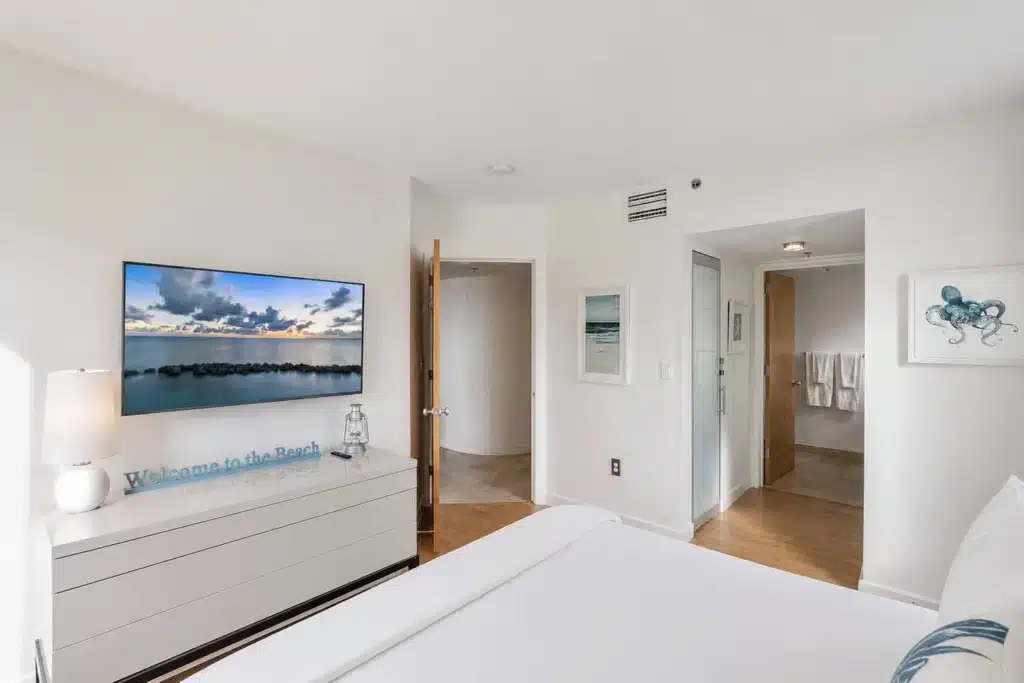

Booking direct with a Miami vacation rental operator typically saves you the Airbnb guest service fee, which runs 14.1% to 16.5% of your booking subtotal under Airbnb’s documented fee structure, while a direct reservation usually only adds a small card-processing charge, often around 2.9% plus a flat fee. The nightly rate, cleaning fee, and local lodging taxes stay roughly the same either way. The real difference shows up on your final checkout screen, not the advertised nightly price.
Key Takeaways
- Airbnb’s guest service fee runs 14.1% to 16.5% of the booking subtotal under the split-fee model still used on many listings, while hosts pay roughly 3%, according to Airbnb’s own Help Center.
- Under Airbnb’s newer single-fee structure, the host absorbs one combined fee (commonly cited around 15.5%) and the guest sees a price closer to the final total upfront.
- Direct bookings typically only add payment processing costs, often estimated around 2.9% plus $0.30 per transaction, according to third-party fee analyses like Boostly’s.
- Local lodging taxes, including Miami-Dade’s tourist tax components and Miami Beach’s Resort Tax, apply whether you book on Airbnb or directly with the property owner.
- Guests who book directly return to book again 28.3% of the time, compared with just 8.9% for guests who book through Airbnb, according to hostAI data.
- At 404th 360 Collins in South of Fifth, direct guests skip the OTA service fee entirely and deal with a host who answers the phone, not a chatbot queue.
If you have ever pulled up a listing on Airbnb, then found the same property’s own website and seen a different bottom-line total, you already know the question this article answers. Direct booking versus Airbnb is not really about which platform looks nicer. It is about which line items disappear from your receipt and which ones follow you no matter where you click “reserve.”
At Retreats Miami, we manage six vacation rental properties across South of Fifth, Brickell, Coconut Grove, and Miami’s Design District, and we see guests compare both paths every week. Miami-Dade welcomed 28.3 million visitors in 2026, according to the Greater Miami Convention & Visitors Bureau, and a growing share of them are shopping around before they book, checking Airbnb, then checking the property’s own site to see if the math changes.
This guide breaks down exactly where your money goes under each option, walks through a real Miami Beach booking scenario line by line, and tells you honestly when Airbnb is still the smarter call. No vague “save money by booking direct” claims. Just the actual fee structure, in 2026 dollars, for a market you can verify.
What Is the Real Difference Between Booking Direct and Booking on Airbnb?
Booking direct means reserving a rental through the property owner’s own website, phone line, or messaging channel instead of through a marketplace like Airbnb, Vrbo, or Booking.com. The core difference is fee structure: direct bookings typically retain the full nightly rate minus a small payment-processing cost, while Airbnb bookings include a built-in guest service fee layered on top of the host’s rate.
Specifically, Airbnb currently operates two fee models. Under the split-fee structure, which is being phased out as hosts migrate to the newer model, hosts pay approximately 3% of the booking subtotal (4% in Brazil) while guests pay a service fee of 14.1% to 16.5% of that same subtotal, according to Airbnb’s Help Center. Under the newer single-fee structure, the host absorbs one combined fee, commonly cited around 15.5%, and the price a guest sees is closer to the true total from the start.
As a result, the nightly price you see on Airbnb is rarely the price you pay. Direct booking sites, including retreatsmiami.com, show a total that already reflects the nightly rate, cleaning fee, and applicable taxes, without an additional guest service fee stacked on top at checkout.
Why Do Hotels Prefer Direct Booking?
Hotels and independent vacation rental operators prefer direct booking because it eliminates OTA commissions and gives them a direct communication channel with the guest. For hotels, that commission often runs comparable to or higher than Airbnb’s host-side fee, cutting into already thin margins on rooms priced competitively against nearby properties.
For a vacation rental operator like Retreats Miami, the math is similar but the stakes are personal. A booking that comes through Airbnb means the platform owns the guest relationship: the messaging thread, the review, the email address. A direct booking means we know who is staying at 1430 in Brickell before they arrive, we can text them directly if their flight is delayed, and we build a real relationship instead of a one-time transaction routed through an app.
Direct-booking guests also return more often. According to hostAI data from 2026, guests who book directly return to the same property 28.3% of the time, compared with only 8.9% for guests who originally booked through Airbnb. That gap is exactly why hosts push direct booking. It is not just about this trip. It is about whether you come back to 404th 360 Collins next winter without shopping around again.
How Much Does Airbnb Actually Charge Guests and Hosts?
Airbnb charges guests a service fee and hosts a separate commission, with the exact split depending on which fee model applies to a given listing. As of 2026, many listings still use the legacy split-fee model, while others have migrated to Airbnb’s newer single host-only fee, so the same booking can look different depending on which structure the listing falls under.
Under the split model, Airbnb’s own example shows a host setting a $100 nightly price. The host receives $97 after the roughly 3% host fee, while the guest pays approximately $115 once the 14.1% to 16.5% guest service fee is added. Under the single-fee model, Airbnb’s example shows a host setting a $115 price; the guest sees exactly $115, and the host earns $97 after Airbnb deducts its combined fee, commonly cited at 15.5%, from the payout.
Boostly’s 2026 analysis illustrates this at a larger scale: on a $2,000 booking, a 15.5% single fee costs approximately $300, leaving the host around $1,700 before other operating costs. That fee is deducted automatically from the total before the host ever receives payout, according to Airbnb’s own fee documentation.
| Fee Type | Airbnb Split Model | Airbnb Single-Fee Model | Direct Booking |
|---|---|---|---|
| Host-side fee | ~3% of subtotal | ~15.5% combined fee | None (host keeps full rate) |
| Guest-side fee | 14.1%-16.5% of subtotal | Built into displayed price | None |
| Payment processing | Included in platform fee | Included in platform fee | ~2.9% + $0.30 per transaction (estimated) |
| Local lodging taxes | Collected at checkout | Collected at checkout | Collected at checkout |
| Cleaning fee | Set by host, shown separately | Set by host, shown separately | Set by host, shown separately |
Notably, taxes and cleaning fees do not disappear in either scenario. What changes is whether an extra 14% to 16.5% guest-facing markup sits between the advertised rate and your final total.
Is There a Better Option Than Airbnb?
Direct booking is a better option than Airbnb for guests who already know which property they want, have stayed before, or found the listing through a trusted source like a referral or the owner’s own website. Airbnb remains the better option for first-time travelers who need the platform’s discovery tools, identity verification, and dispute resolution to feel confident booking a property they have never seen in person.
Vrbo and Booking.com function similarly to Airbnb, layering commission and service fees onto the base rate. Hostfully reports Vrbo charges roughly a 5% host commission plus 3% payment processing, a different structure from Airbnb’s but still a marketplace markup absent from a direct reservation.
For repeat Miami guests, direct booking is the more efficient path. If you have already stayed at 402nd 360 Collins and loved the Walk Score of 95 and the one-block stroll to South Pointe Park, there is little reason to route your second trip back through a marketplace and its added fee. You already know the space, the neighborhood, and the host.
For a first Miami trip with no prior relationship to any specific property, Airbnb’s reviews and built-in protections carry real value, and that value is worth paying for on booking one.
Which Direct Booking Platform Is the Best?
The best direct booking approach depends on the operator, but the strongest options combine a professional booking website with transparent pricing, real photos, and a live phone number or messaging channel. Retreats Miami’s direct booking site, retreatsmiami.com, lists all six properties with the same photos, availability calendar, and total pricing you would see reflected in an Airbnb search, minus the added guest service fee.
Larger direct-booking software platforms like Touch Stay focus on guest communication and digital guidebooks rather than payment processing itself, which typically runs through a processor like Stripe at an estimated 2.9% plus $0.30 per transaction, according to Boostly’s 2026 fee analysis. That processing cost is a fraction of Airbnb’s combined guest-and-host fee load.
What actually makes a direct booking platform trustworthy is verifiable identity: a real business name, a working phone number, clear cancellation terms in writing, and a rental agreement you can read before you pay. If a “direct” site is missing any of those, that is a bigger red flag than a slightly higher price would be.
What Is the 75-55 Rule in Airbnb?
There is no verified, officially documented “75-55 rule” published by Airbnb or a recognized industry body. If you have seen this term referenced elsewhere, treat it as an unofficial or unverified claim rather than an established Airbnb policy. What is documented and worth focusing on instead are Airbnb’s actual, published Superhost requirements: a 4.8+ average rating, a 90%+ response rate, 10+ stays per year, and a cancellation rate below 1%.
Those Superhost benchmarks matter more to your booking decision than any informal numeric rule. A Superhost badge signals a track record of consistency, but it does not change the fee structure applied to your booking. Whether a host is a Superhost or not, the same guest service fee applies under Airbnb’s split or single-fee models.
If you are trying to evaluate whether a listing is trustworthy, look at the actual review count and how recent the reviews are, rather than searching for a numeric rule that is not documented anywhere official.
How Do You Compare a Direct Quote to an Airbnb Checkout Total?
Comparing a direct quote to an Airbnb total means pulling the exact Airbnb checkout screen for your specific dates, then requesting a direct quote for the same dates from the property, and lining up every line item side by side. Travel DRD’s 2026 analysis recommends this exact method rather than comparing advertised nightly rates, since nightly rates rarely reflect what either channel actually charges at checkout.
Specifically, walk through five line items: nightly rate, cleaning fee, guest service fee (Airbnb only), local lodging taxes, and any security deposit. BNB OKC’s worked example shows a $1,500, three-night Oklahoma City booking generating roughly $210 in Airbnb guest fees at approximately 14%, a cost that simply is not present on a direct quote for the same dates.
For a Miami booking, taxes are the item most travelers overlook. Miami-Dade collects a total tourist-tax component around 6% on short-term rentals under six months, and Miami Beach adds its own city Resort Tax on top for properties located within city limits, according to Miami-Dade County’s Tourist and Restaurant Taxes page. Those taxes apply whether you book through Airbnb or directly, so do not expect a direct booking to shrink your tax line.
A Worked Example: Three Nights at a South of Fifth Penthouse
Say you are booking three nights at 404th 360 Collins, the top-floor corner penthouse one block from the sand in South of Fifth, at a nightly rate of $400. That puts the base subtotal at $1,200 before fees.
- Nightly rate subtotal: $1,200 (three nights at $400)
- Cleaning fee: set by the host, shown on both Airbnb and the direct site identically
- Airbnb guest service fee: approximately 14.1% to 16.5% of the subtotal under the split model, or built into the single-fee total, an amount not present on a direct quote
- Local lodging taxes: Miami-Dade and Miami Beach tax components, applied identically on both channels
- Refundable security deposit: $350 for this specific property, collected separately and not included in either platform’s displayed total
The nightly rate, cleaning fee, taxes, and $350 deposit stay the same no matter how you book. The guest service fee is the one line that disappears on a direct reservation, and it is the difference that shows up when you compare the two final numbers side by side.
What Are the Hidden Costs Competitors Rarely Explain?
The costs most comparison articles skip are payment-processing overhead on the direct side, the value of Airbnb’s dispute resolution, and how to verify a direct operator is legitimate before wiring money to a stranger’s booking form. These gaps matter more than the headline fee percentages that dominate most “book direct vs Airbnb” content.
First, direct booking is not entirely free of transaction costs. Card processing on a direct site typically runs an estimated 2.9% plus $0.30 per transaction, according to Boostly’s 2026 breakdown, a cost usually absorbed by the operator rather than passed to the guest, but worth knowing exists.
Second, Airbnb’s guest service fee buys something real: identity verification, a review history you can browse before booking, and a formal dispute process if a property is misrepresented. Direct-booking operators need to replace that trust some other way, typically through their own review count, a clear rental agreement, and transparent house rules.
At Retreats Miami, that trust comes from a track record you can verify. 404th 360 Collins has hosted guests for over 10 years and carries more than 330 reviews, a number that did not accumulate on our own website. It accumulated on Airbnb, where the property is also listed, and that review history is exactly what a guest booking direct for the first time should ask to see.
Third, verify a direct operator before paying. Check for a real business name, a working phone number answered by a person, a written rental agreement, and confirmation the property carries valid local registration, such as the Certificate of Use required for vacation rentals in unincorporated Miami-Dade County, or municipal registration like 402nd 360 Collins’ documented BTR007452-09-2019.
How Should Different Types of Travelers Approach This Decision?
The right channel depends heavily on who is booking and why. A first-time visitor with no property in mind benefits most from Airbnb’s search and review tools. A repeat guest, a large group with a specific property in mind, or a long-stay traveler benefits more from direct booking’s lower fees and direct host access.
For a bachelorette party of eight coordinating a multi-night stay, the guest service fee on a marketplace booking can add up fast, since it is calculated on the full subtotal including cleaning fees. Booking direct for a property like 1430, the pet-friendly Brickell villa with a heated saltwater pool and mini-golf green, keeps that markup off a group total that is already split many ways.
For a family reunion needing serious space, a property like 120 Shore in North Coconut Grove, with six bedrooms and a private saltwater pool plus heated hot tub, works best booked direct once the group has confirmed dates, since large multi-night bookings see the biggest dollar impact from a percentage-based service fee.
For a snowbird booking an extended winter stay, the math favors direct booking even more. A guest service fee calculated as a percentage of a multi-week subtotal becomes a substantial dollar figure, and a direct-booking relationship also tends to produce more flexible terms on extended stays than a one-size-fits-all marketplace cancellation policy.
For a first-time Miami visitor who has never stayed at any of these six properties, Airbnb’s search filters, verified reviews, and dispute process are worth the added fee on a first trip. Use Airbnb to find the right fit, then consider booking direct on the return trip once you know exactly which unit and neighborhood work for your group.
How Do You Verify a Direct Vacation Rental Operator Is Legitimate?
Verifying a direct operator means confirming their business identity, checking for local licensing, and reading the cancellation policy before entering payment information. This step matters more on a direct site than on Airbnb, because the marketplace’s built-in verification and payment protection are not automatically present when you pay a property owner directly.
Specifically, look for four things. First, a real, findable business name and phone number, not just a booking form. Second, mention of local registration, such as a Certificate of Use under Miami-Dade’s Section 33-28 vacation-rental ordinance for unincorporated county properties, or municipal registration for Miami Beach listings. Third, a written cancellation and refund policy you can read before booking, not one buried in a confirmation email after payment. Fourth, a security deposit process explained upfront, including the exact amount and whether it is refundable.
Retreats Miami discloses all of this per property. 402nd 360 Collins lists its registration number directly on its property page, and every property states its refundable deposit amount clearly before checkout, whether that is $250 at 402, $350 at 404, or $1,000 at 120 Shore. If a direct-booking site cannot answer these four questions plainly, book through Airbnb or Vrbo instead, where platform-level protections apply even when the individual host’s transparency does not.
What Should You Do Before You Book Either Way?
Before booking on any channel, pull the exact checkout total for your specific dates rather than trusting an advertised nightly rate. This single habit, recommended across multiple 2026 fee analyses including Travel DRD’s guidance, resolves most confusion about which option actually costs less for your trip.
- Search your dates on Airbnb and screenshot the full checkout breakdown, including the guest service fee line.
- Message the property directly (via its own website, phone, or Airbnb inbox) and ask for a direct-booking quote for the same dates.
- Compare nightly rate, cleaning fee, taxes, and security deposit separately from the guest service fee, since only the fee line typically differs.
- Confirm the direct operator’s registration and cancellation policy in writing before paying.
- Pay by credit card on either channel, which preserves your ability to dispute a charge if the property is misrepresented.
Skipping straight to the lowest advertised nightly rate is the most common mistake. A $350 nightly rate on Airbnb with a 16% guest fee can cost more at checkout than a $370 direct nightly rate with no added fee, once cleaning costs and taxes are layered on both.

Frequently Asked Questions
Does Retreats Miami charge a security deposit on direct bookings?
Yes. Each property has its own refundable deposit amount, collected after booking and not included in the displayed total. For example, 404th 360 Collins requires a $350 refundable deposit, 402nd 360 Collins requires $250, and 120 Shore requires $1,000. Deposits are the same whether you book direct or through Airbnb.
Is it cheaper to book direct with Retreats Miami than through Airbnb?
Typically yes, because direct booking through retreatsmiami.com does not add Airbnb’s guest service fee, which runs 14.1% to 16.5% of the booking subtotal under the split-fee model, or is built into the total under the single-fee model. Nightly rates, cleaning fees, taxes, and deposits remain the same either way, so compare full checkout totals for your exact dates rather than the advertised nightly price.
Which Retreats Miami property is best for a bachelorette party?
1430 in Brickell sleeps up to 12 across four bedrooms and includes a heated saltwater pool, mini-golf green, and fire pit, making it well suited to a group that wants space to spread out. For a smaller group wanting a quieter, beach-adjacent option, 404th 360 Collins in South of Fifth sleeps up to six but keeps quiet hours from 10 PM, so it fits a lower-key celebration better than a late-night party crowd.
Is parking included at Retreats Miami properties?
Most properties include on-site parking. 404th 360 Collins includes a free assigned garage spot that comfortably fits sedans and compact cars, and 402nd 360 Collins includes gated garage parking for one small or medium vehicle. Larger properties like 1430 and 520 also list free on-premise parking, though guests with SUVs or larger vehicles should message ahead to confirm fit.
What’s the cancellation policy for direct bookings?
Cancellation terms are set per property and disclosed before you pay, which is exactly what you should verify on any direct-booking site before entering payment details. Always confirm the specific policy in writing for your dates, since terms can vary by season and property. Airbnb applies its own separate cancellation policy tiers to bookings made through its platform.
How many guests can each Retreats Miami property sleep?
Capacity varies widely across the portfolio. 404th 360 Collins and 402nd 360 Collins each sleep up to 6 guests, 1430 and 120 Shore sleep up to 12, 520 and 530 sleep up to 12 each, and the Compound, two connected villas in the Design District, sleeps up to 20 guests total.
Does booking direct mean I lose Airbnb’s guest protections?
Booking direct does mean you are not covered by Airbnb’s built-in dispute resolution or identity verification system, since those are platform-specific protections. To offset that, verify the operator’s business identity, local registration, and written cancellation policy before paying, and always use a credit card so you retain your own dispute rights through your card issuer.
The Bottom Line on Book Direct vs Airbnb
Direct booking wins on price whenever you already trust the operator, because it removes Airbnb’s guest service fee (14.1% to 16.5% under the split model, or built into the single-fee total) without touching your nightly rate, cleaning fee, taxes, or deposit. Airbnb wins on trust for a first booking with an unfamiliar property, since its reviews, verification, and dispute process carry real value worth the added fee.
The practical move for 2026: use Airbnb to discover a property and confirm it fits your group, then book your return trip directly once you know the space. That is exactly why 28.3% of direct-booking guests come back for a second stay, compared with 8.9% of Airbnb-originated guests, according to hostAI’s 2026 data. Pull the full checkout total on both channels for your exact dates before deciding, and let the numbers, not the nightly rate, make the call.
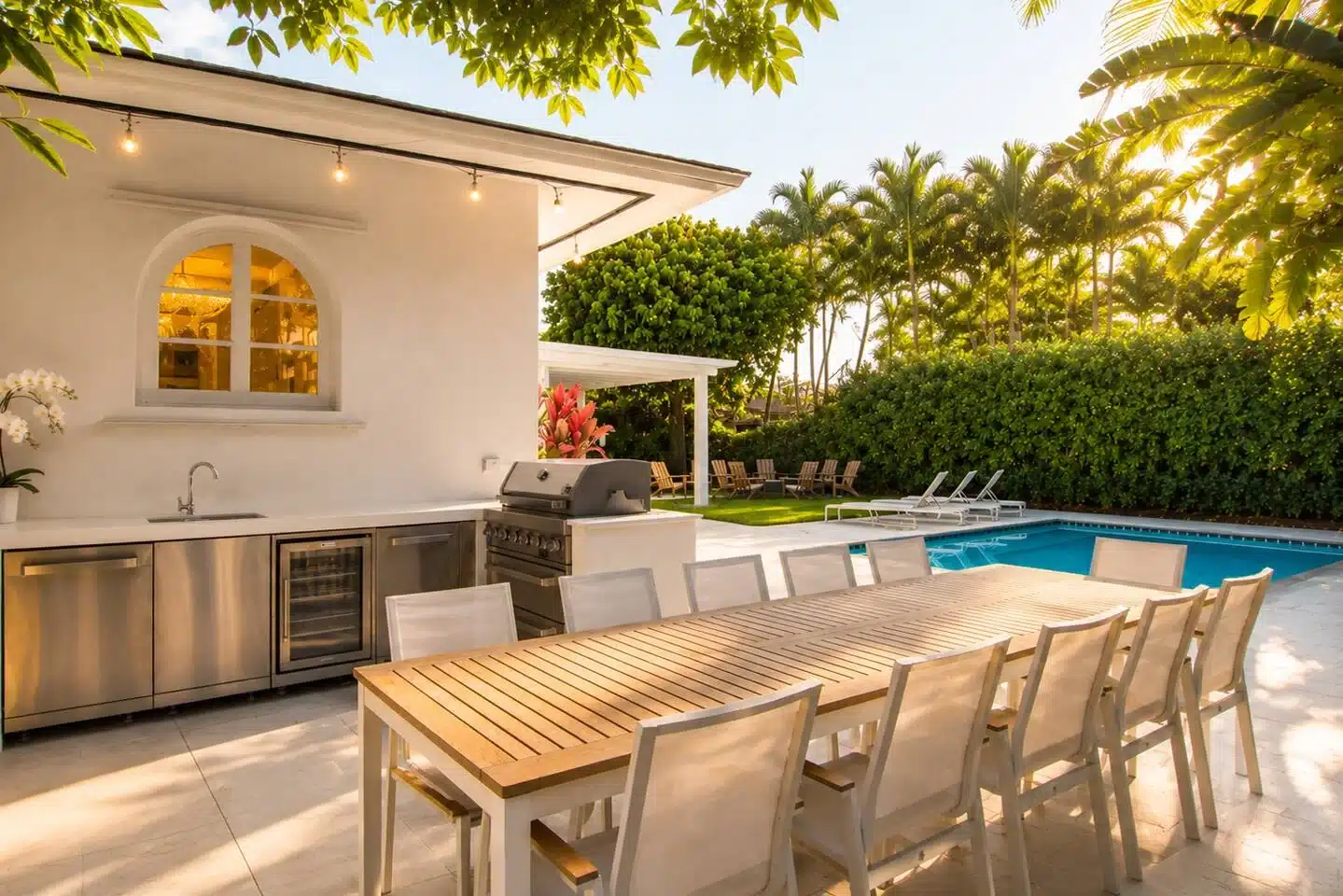
If your group is weighing a direct reservation for a Brickell stay, 1430 puts you five minutes from Downtown with a heated saltwater pool and mini-golf green that photograph as well as they use. Check availability and book direct here to skip the added guest service fee on your next Miami trip.
Content powered by inkSTR.co